
The meal companion for modern food.
Healthy eating matters. But real life includes restaurants, rushed lunches, travel, family dinners, convenience and meals that are not nutritionally perfect. SiPore® was designed around that reality. Instead of asking people only to change what they eat, SiPore® creates another place to act:
With the meal. During digestion.
The idea is simple.
The meal arrives. Reach for SiPore®. Have your meal.
SiPore® is a meal-companion technology designed to reduce the impact of modern meals at the level of digestion.
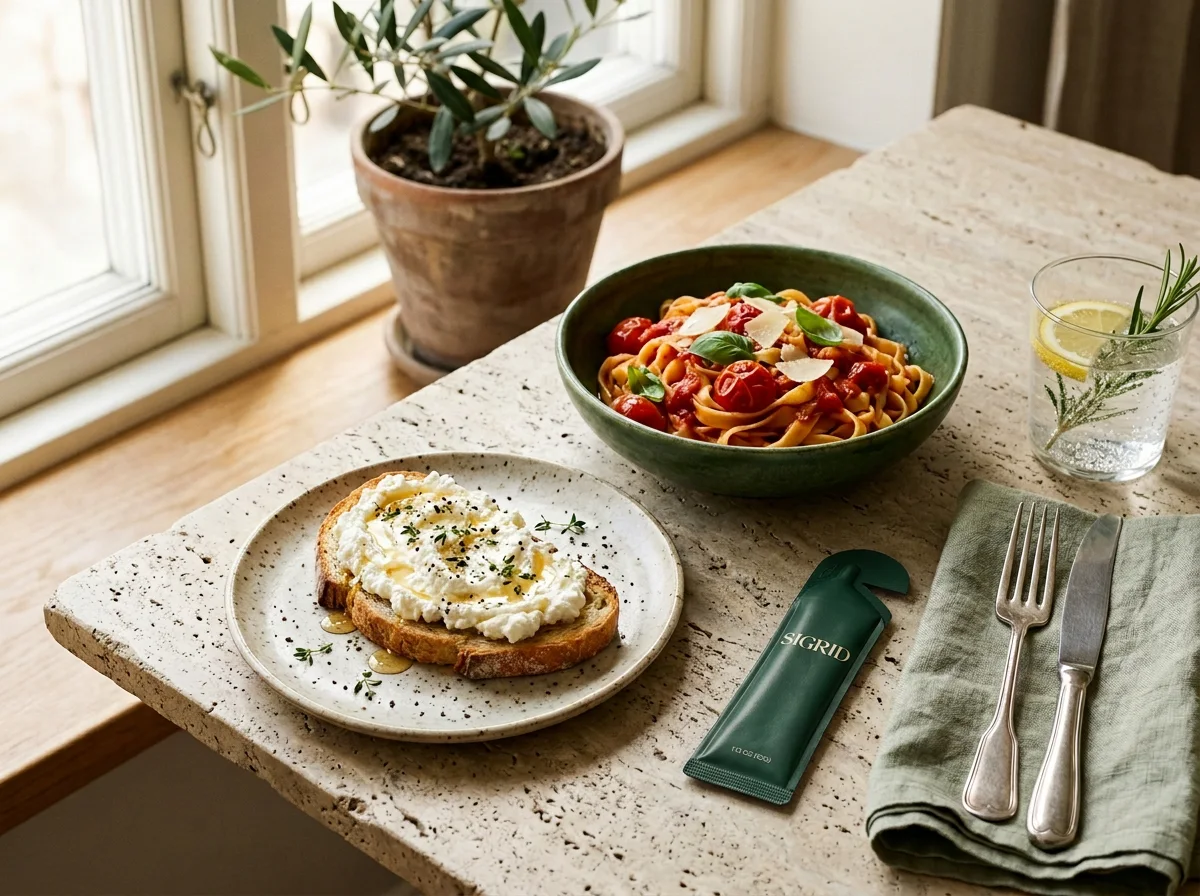
A third place to act.
Traditionally, metabolic-health approaches focus primarily on two places. SiPore® introduces a third.
Change what goes into the meal. Eat differently. Improve meal composition. Restrict or avoid certain foods.
Act through systemic biological pathways in the body.
Act during digestion. SiPore® works locally in the gut while carbohydrates and fats from the meal are being broken down.
Not instead of better food. Not instead of appropriate healthcare. Another place to act.
Why the meal?
The meal is not an arbitrary moment. SiPore®'s role is connected directly to how the technology works. Carbohydrates and fats enter the digestive system with the meal. Digestive enzymes begin breaking them down. SiPore® works locally during this process, slowing the breakdown of carbohydrates and fats so energy from the meal enters the system more gradually. That makes the meal the natural moment for SiPore®.
Not hours before. Not as an unrelated morning wellness ritual. Not simply because it is easy to remember.
Because digestion is when the technology has its role.



What is a meal companion?
A meal companion is a technology designed to accompany eating because its function takes place while the meal is being processed. For SiPore®, that creates a simple connection between biology, behavior and category.
Designed for real life.
Metabolic health cannot depend on every meal being perfect. People do not choose food based on nutrition alone. Meals are also shaped by time, taste, convenience, family, culture, work, travel and social life. Research on eating behavior shows that contextual cues and the food environment can strongly influence food choices and consumption, often without deliberate awareness. [1] The SiPore® audience is people who want to live well in the modern food environment without having to optimize every meal perfectly. That does not make food quality unimportant. It means a realistic metabolic-health strategy should acknowledge the meals people actually eat.
Modern food is the context. SiPore® is designed to work within it.
SiPore® is not another set of food rules.
SiPore® is not built around guilt. It is not about labeling a meal as a failure. And it is not designed to make nutrition irrelevant.
Food quality, meal composition and overall eating patterns remain important.
SiPore® adds another way to influence the meal at the level of digestion.
Make modern meals work better for you.
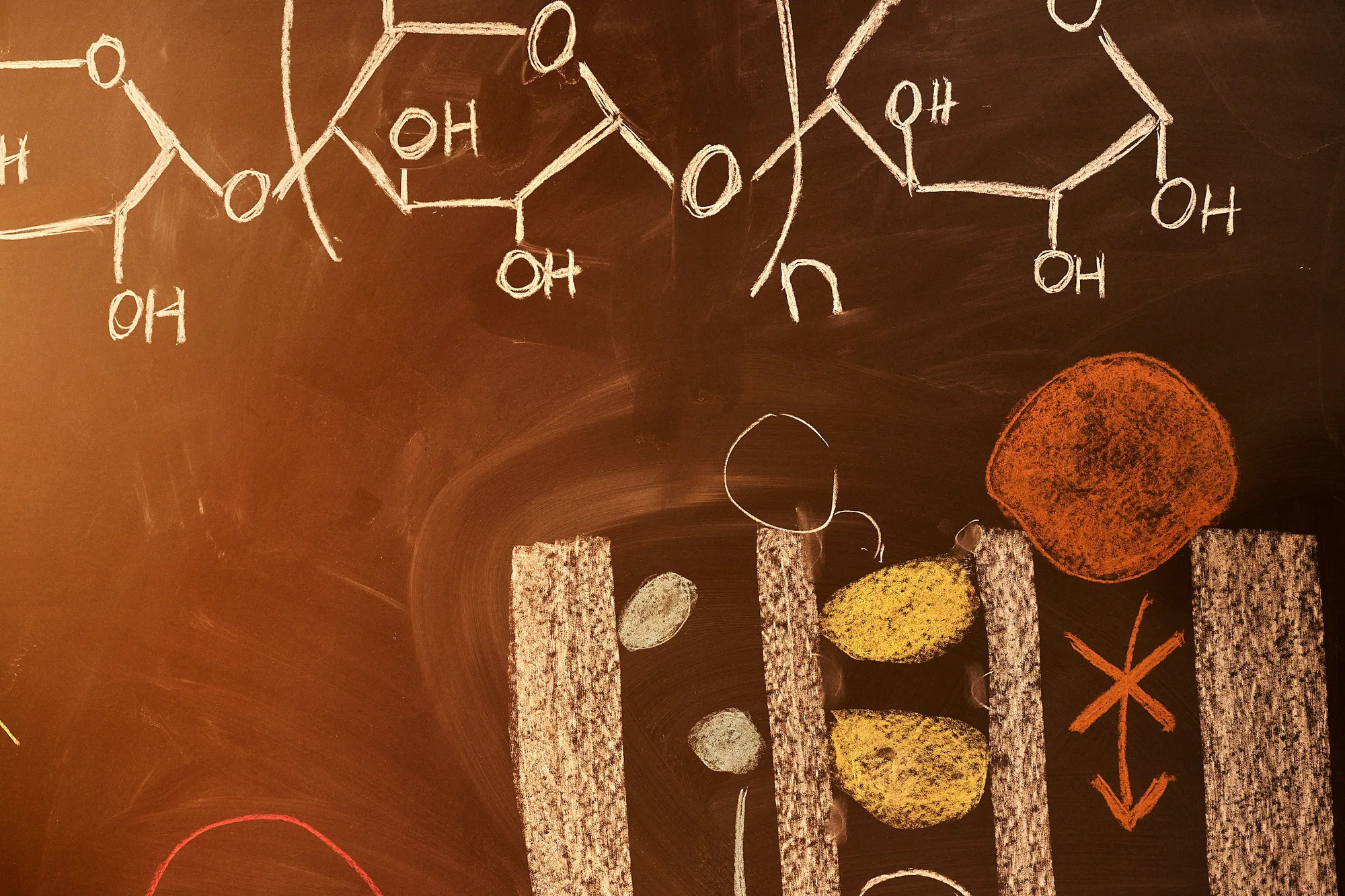
The science makes the category possible.
SiPore® is a patented technology based on precisely engineered porous silica particles. It works locally in the gastrointestinal tract and does not enter the bloodstream. During digestion, its engineered pores entrap a portion of digestive enzymes involved in breaking down carbohydrates and fats. This slows the breakdown of the meal so energy enters the system more gradually.
- EATCarbohydrates and fats enter digestion.
- ENTRAP + SLOWSiPore® entraps a portion of digestive enzymes.
- MORE GRADUALBreakdown and energy delivery become more gradual.
No loading period is required for the mechanism to begin.
SiPore®'s local mechanical mode of action begins during digestion of the first meal with which it is used. That means its role is connected directly to the meal from the start.
“Works from the first meal” describes the onset of the local mechanism.
It does not mean longer-term outcomes such as changes in weight, body composition, A1C or cholesterol occur after a single meal. Those outcomes must be understood within the relevant evidence and timeframe.
One role. Different formats.
SiPore® is the technology.
A capsule, powder, gel or future format is simply a way of delivering that technology. Likewise, dietary supplement, medical food and other commercial or regulatory routes describe particular products. They do not define the SiPore® category.
The format can change. The role stays the same: SiPore® accompanies the meal.
This allows the meal-companion concept to extend across different products, brands, channels and future applications without changing what SiPore® fundamentally means.
One technology. Multiple expressions.
SiPore® Technology can be expressed through different brands and channels while retaining the same technology-level role.
Practitioner-facing SiPore® products and professional resources.
Technology partnerships that bring SiPore® to new products, brands and markets.
From a technology to a behavior.
The science can be sophisticated. The behavior should not be. Habit research shows that repeating a simple behavior in a consistent context can strengthen automaticity over time, and broader habit research describes recurring contextual cues as important triggers of repeated behavior. [2][3][4] For SiPore®, the meal itself provides a recurring context. The intended association is simple:
The meal arrives. Reach for SiPore®. Have your meal.
This is a behavioral design principle, not a claim that SiPore® has demonstrated superior adherence or habit formation in clinical studies.
Meal + SiPore®.

The three ideas come together.
The meal companion for modern food.
Modern food delivers energy fast. SiPore® slows it down.
Designed to reduce the impact of modern meals at the level of digestion.
Explore the Why SiPore® story.
- Cohen DA, Babey SH. Contextual Influences on Eating Behaviors: Heuristic Processing and Dietary Choices. Obesity Reviews. 2012;13(9):766-779.doi:10.1111/j.1467-789X.2012.01001.xOpen source
- Lally P, van Jaarsveld CHM, Potts HWW, Wardle J. How are habits formed: Modelling habit formation in the real world. European Journal of Social Psychology. 2010;40(6):998-1009.doi:10.1002/ejsp.674Open source
- Gardner B, Lally P, Wardle J. Making health habitual: the psychology of habit-formation and general practice. British Journal of General Practice. 2012;62(605):664-666.doi:10.3399/bjgp12X659466Open source
- Wood W, Rünger D. Psychology of Habit. Annual Review of Psychology. 2016;67:289-314.doi:10.1146/annurev-psych-122414-033417Open source