
It is not only what you eat. How quickly you digest it matters.
We usually think about a meal in terms of what it contains: calories, carbohydrates, fat, protein and fiber. But before carbohydrates and fats can become available to the body, they have to be broken down during digestion. And that process has a speed. Food structure and composition can influence how quickly macronutrients are broken down and become available for absorption. Reviews of the food matrix describe digestion as the physiological interface between food and health, with structure affecting both the extent and kinetics of nutrient availability. [1]
The amount of energy matters. So does the rate at which it arrives.

Digestion connects what is on the plate with what reaches the body.
- MealWhat you eat
- DigestionThe meal is broken down
- Nutrient availabilityNutrients become accessible
- Metabolic responseThe body responds
Before a meal becomes metabolic input, it first has to be processed through digestion. Carbohydrates and fats enter the digestive system. Digestive enzymes help break them down. As digestion progresses, nutrients and energy from the meal become available to the body. The food matrix can regulate this process by influencing how accessible nutrients are to digestive enzymes and how quickly they are released during digestion. [1] Most conversations about nutrition focus on the first step. Many conversations about metabolic health focus on the last. Digestion is the process in between.
That middle step deserves more attention.
Digestion is not an on/off switch.
A meal is not instantly converted into available energy. Its carbohydrates and fats are progressively broken down during digestion. That means two questions matter: How much energy does the meal contain? How quickly does that energy become available? The second question is digestion speed. A systematic review of 25 randomized crossover trials found that differences in starch structure, including amylose content, gelatinization and particle integrity, affected post-meal glucose and insulin responses. [2]
Similar nutrients. Different structure. Different digestion. Different post-meal response.

Similar nutrients can be processed differently depending on how food is structured.
 INTACT STRUCTUREPhysical barriers can limit how quickly digestive enzymes reach nutrients.
 PARTICLE SIZEGrinding and milling can increase the surface area exposed to digestion.
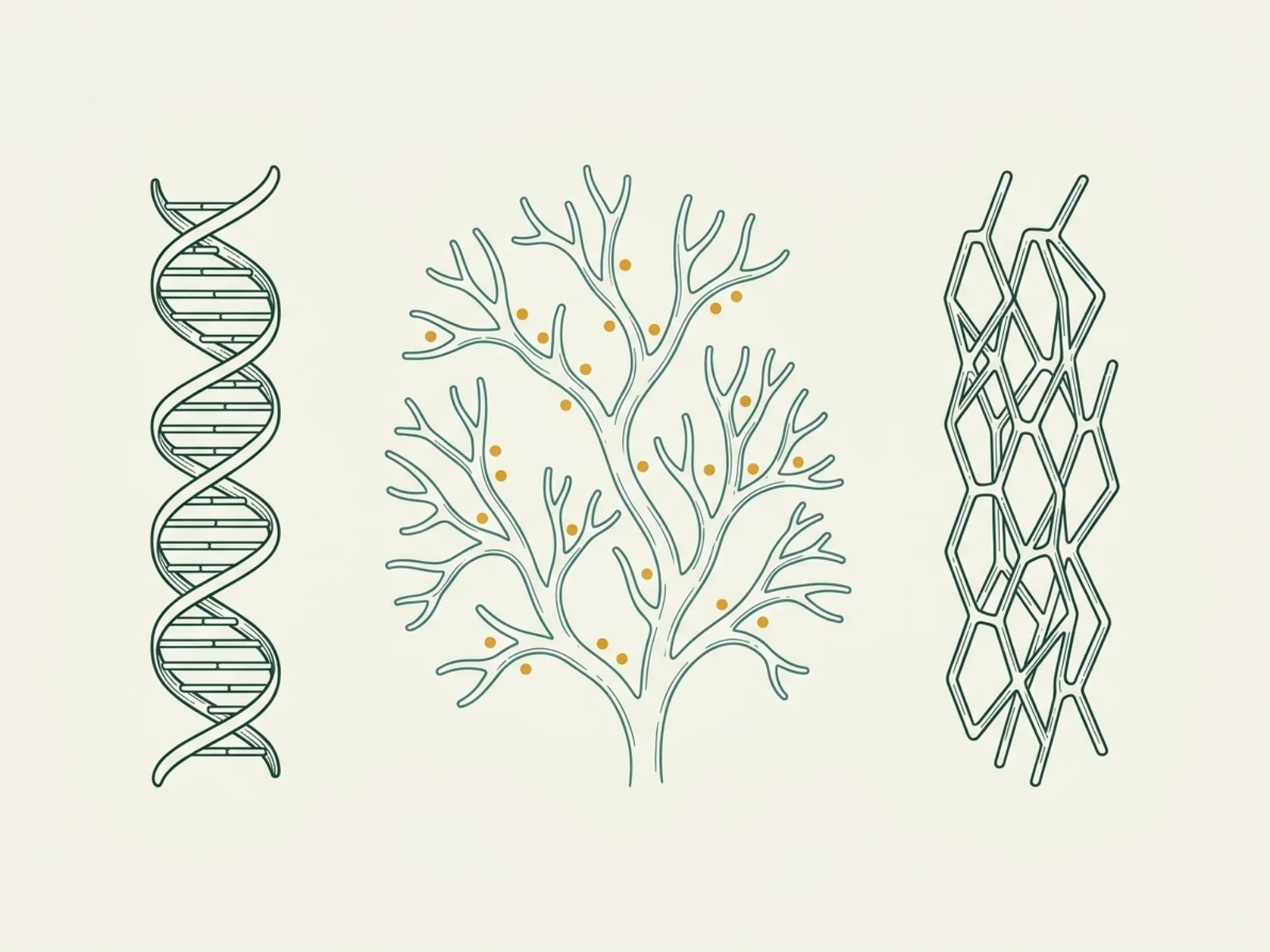 STARCH STRUCTUREAmylose content, gelatinization and retrogradation can change starch digestibility.
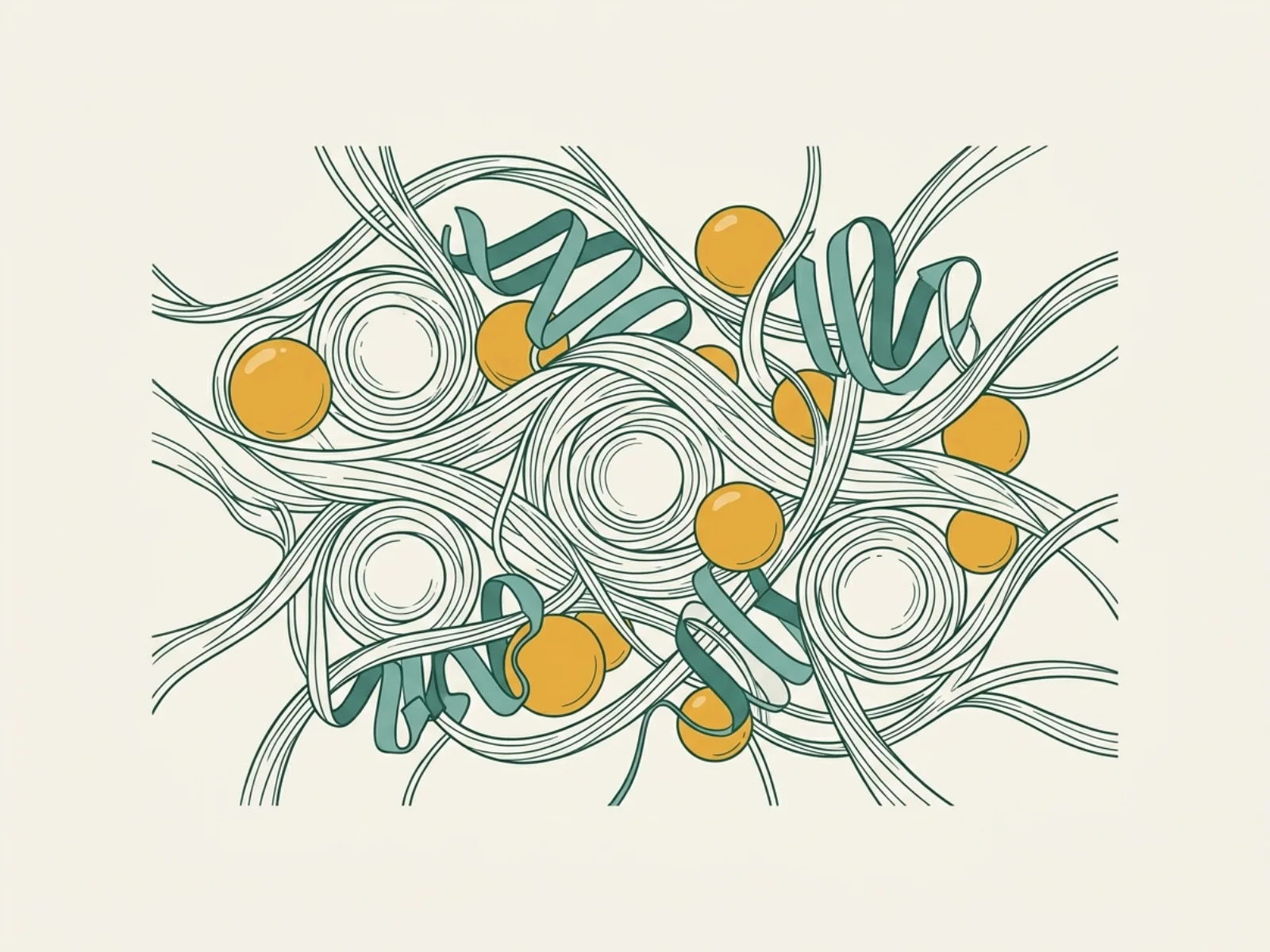 FOOD MATRIXProteins, fats, fiber and other components can alter nutrient accessibility.
Classic and contemporary research both support this principle. Studies of carbohydrate foods show that physical structure can materially alter the rate of starch digestion and post-meal glucose and insulin responses. [2] [3] Reviews of starch bioavailability also distinguish rapidly digestible, slowly digestible and resistant starch, emphasizing that starch structure and the surrounding food matrix affect the rate and extent of digestion. [4]

Modern meals can create a different digestive challenge.
Food processing can improve safety, convenience, shelf life and accessibility. It is not inherently negative. But processing can also change the physical structure of food. Milling, grinding, cooking and other transformations can reduce structural barriers and change how readily nutrients are exposed to digestive enzymes. Research on food structure and starch digestibility shows that disrupting physical structure, altering particle size and changing starch organization can change digestive accessibility and post-meal metabolic responses. [1] [2] [3] [4]
- Modern meal
- Fast digestion
- Fast energy delivery
- Post-meal response
- Repeated load
What happens after the meal matters too.
Eating happens repeatedly throughout the day, and every meal initiates another period of digestion, nutrient availability and metabolic response. Scientific reviews of postprandial metabolism emphasize that repeated acute responses after meals are relevant to understanding longer-term cardiometabolic patterns. [5] [6] For consumers, the relevance can also be more immediate. Modern meals can be followed by familiar experiences such as:
Hunger returning sooner than expected Cravings after eating The urge to snack Post-meal energy dips
Every meal creates another period of digestion and metabolic response.
No single meal defines long-term metabolic health. But every meal has to be processed. That is why the SiPore® perspective is meal by meal. Repeated fast, energy-dense meals create repeated post-meal metabolic demands.
Better metabolic health starts with the meal.
What you eat matters. How the meal is processed matters too.
- CompositionWhat is in the meal?
- QuantityHow much is being eaten?
- StructureHow accessible are the nutrients?
- Digestion speedHow quickly are they broken down?
- Metabolic responseHow does the body respond?
Nutrition has traditionally focused most heavily on composition and quantity. Those remain essential. But food structure and digestion kinetics add another layer. They help explain why chemically similar nutrients can produce different post-meal responses when presented in different physical forms. The food-matrix literature explicitly describes nutrient availability as a kinetic process shaped by food structure. [1] [4]
Digestion is not just a consequence of eating. It is an intervention point.
The goal is more gradual digestion, not stopping digestion.
Stop digestion Block carbs Block fat Stop absorption Eliminate calories
Make digestion more gradual Slow carbohydrate breakdown Slow fat breakdown Work during digestion Make energy delivery more gradual
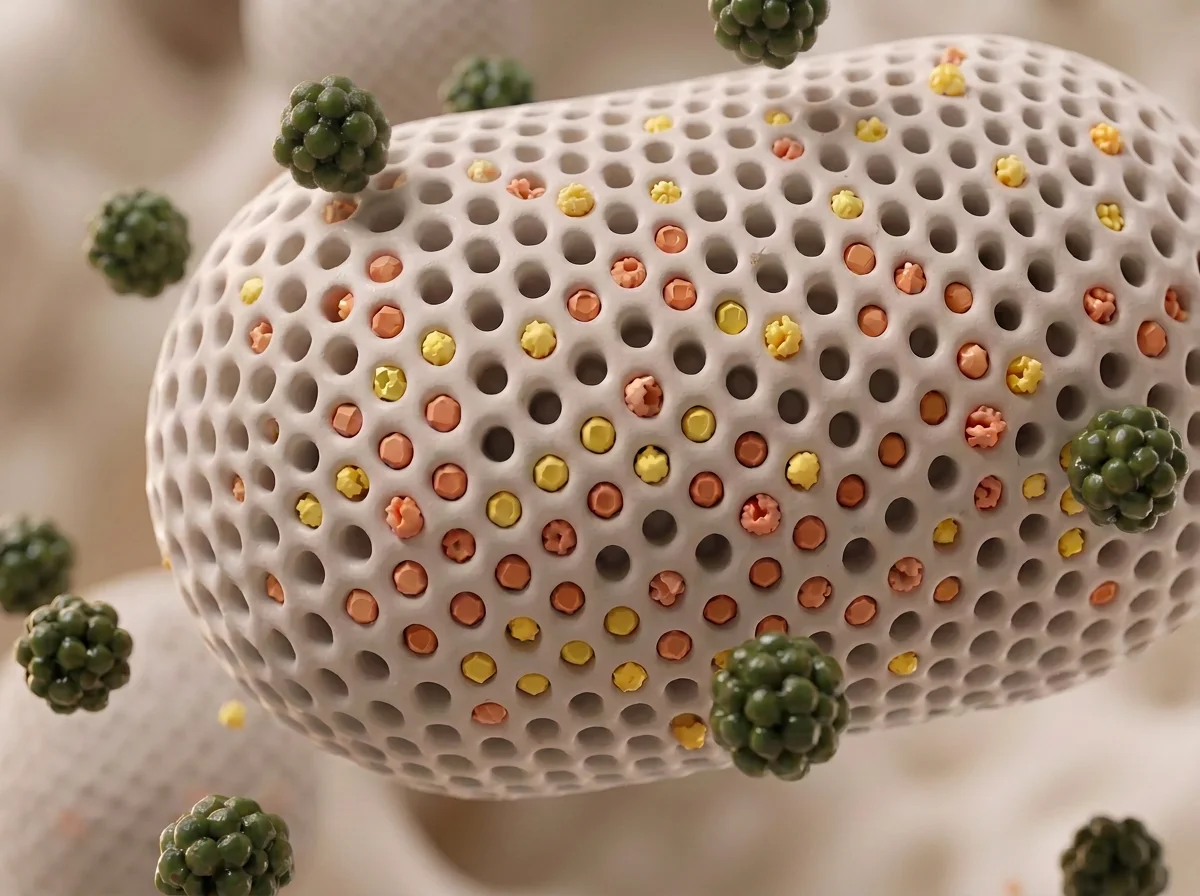
SiPore® works where the meal is being processed.
SiPore® is a patented technology based on precisely engineered porous silica particles. It works locally in the gastrointestinal tract, where digestion happens, and does not enter the bloodstream. During digestion, SiPore®’s engineered pores entrap a portion of digestive enzymes involved in breaking down carbohydrates and fats. This slows the breakdown of the meal so energy enters the system more gradually.
- EATCarbohydrates and fats enter digestion.
- ENTRAP + SLOWSiPore® entraps a portion of digestive enzymes.
- MORE GRADUALBreakdown and energy delivery become more gradual.
If digestion matters, it creates another place to intervene.
Eat differently. Improve meal composition. Restrict or avoid certain foods.
Use interventions that act systemically through the body.
Act locally during digestion. This is the space SiPore® creates.
Once digestion becomes an intervention point, the role of SiPore® becomes much easier to understand. It belongs with the meal - not as a separate health ritual, but as a meal companion designed to act while the meal is being processed.
Discover The Meal CompanionThe meal is more than what is on the plate.
What you eat matters. How much you eat matters. And how quickly the meal is broken down matters too. SiPore® was created around that overlooked part of the process.
Modern food delivers energy fast. SiPore® slows it down.
Continue the Why SiPore® story
- Capuano E, Janssen AEM. Food Matrix and Macronutrient Digestion. Annual Review of Food Science and Technology. 2021;12:193-212.Review explaining how food structure modulates the extent and kinetics of macronutrient availability during digestion.Open source
- Cai M, Dou B, Pugh JE, Lett AM, Frost GS. The impact of starchy food structure on postprandial glycemic response and appetite: a systematic review with meta-analysis of randomized crossover trials.American Journal of Clinical Nutrition. 2021;114(2):472-487. · Systematic review and meta-analysis of 25 randomized crossover trials (369 participants); starchy food structure affected post-meal glucose and insulin responses.Open source
- Björck I, Granfeldt Y, Liljeberg H, Tovar J, Asp NG. Food properties affecting the digestion and absorption of carbohydrates. American Journal of Clinical Nutrition. 1994;59(3 Suppl):699S-705S.Review describing how food structure, particle integrity and starch characteristics influence carbohydrate digestion and post-meal metabolic responses.Open source
- Miao M, Hamaker BR. Food Matrix Effects for Modulating Starch Bioavailability. Annual Review of Food Science and Technology. 2021;12:169-191.Review of rapidly digestible, slowly digestible and resistant starch, and how food matrices and processing affect starch bioavailability.Open source
- Jacome-Sosa M, Parks EJ, Bruno RS, et al. Postprandial Metabolism of Macronutrients and Cardiometabolic Risk: Recent Developments, Emerging Concepts, and Future Directions.Advances in Nutrition. 2016;7(2):364-374. · Review of post-meal macronutrient metabolism and the relevance of repeated acute metabolic responses to longer-term cardiometabolic patterns.Open source
- Mariotti F. The Postprandial Appearance of Features of Cardiometabolic Risk: Acute Induction and Prevention by Nutrients and Other Dietary Substances. Nutrients. 2019;11(9):1963.Review of post-meal metabolic and physiological responses and how meal composition influences postprandial features associated with cardiometabolic risk.Open source