
Questions about SiPore®? Start here.
Clear answers to common questions about SiPore®, its precisely engineered particle structure, gut-local mechanism, the evidence behind it, and how it is used in different products and applications. For deeper scientific detail, each answer links to the relevant Technology or Science resource.
No matching questions. Try another word, such as protein, silica or first meal.
What SiPore® Is
What is SiPore®?
SiPore® is a patented meal-companion technology based on precisely engineered porous silica particles.
The particles are engineered for their function during digestion. Their physical characteristics and controlled pore structure enable SiPore® to interact selectively with digestive enzymes involved in breaking down carbohydrates and fats.
SiPore® works locally in the gastrointestinal tract and does not enter the bloodstream.
Is SiPore® a product?
No. SiPore® is the technology and meal-companion category, not a finished product, supplement, medical food, capsule, gel or powder.
Different finished products can use SiPore® in different formats and regulatory categories.
What is SiPore® made from?
SiPore® particles are made from silica — silicon dioxide.
More specifically, SiPore® uses precisely manufactured synthetic amorphous silica. The manufacturing process controls physical characteristics such as particle size and porosity so the material can perform consistently during digestion.
What makes SiPore® distinctive is therefore not simply the material. It is how the silica particle has been engineered.
What is silicon dioxide?
Silicon dioxide, commonly called silica, is the material from which SiPore® particles are made.
Silica occurs naturally in the environment and in the human diet. SiPore® uses a precisely manufactured form of synthetic amorphous silica so its physical properties and pore structure can be controlled consistently.
A useful distinction is: silica is the material; SiPore® is the precisely engineered particle.
Why are SiPore® particles precisely engineered?
SiPore®’s function depends on physical structure.
The particle size, physical form and internal pore architecture are controlled so the particles can interact selectively with digestive enzymes during the digestive process.
This precision is what turns silica from a material into the functional SiPore® platform.
What is patented?
SiPore® is a patented technology based on precisely engineered porous silica particles.
For detailed information about the patent portfolio and the specific scope of individual patents, visit Innovation & IP.
How SiPore® Works
How does SiPore® work?
SiPore® works through a physical, size-selective mechanism inside the gut.
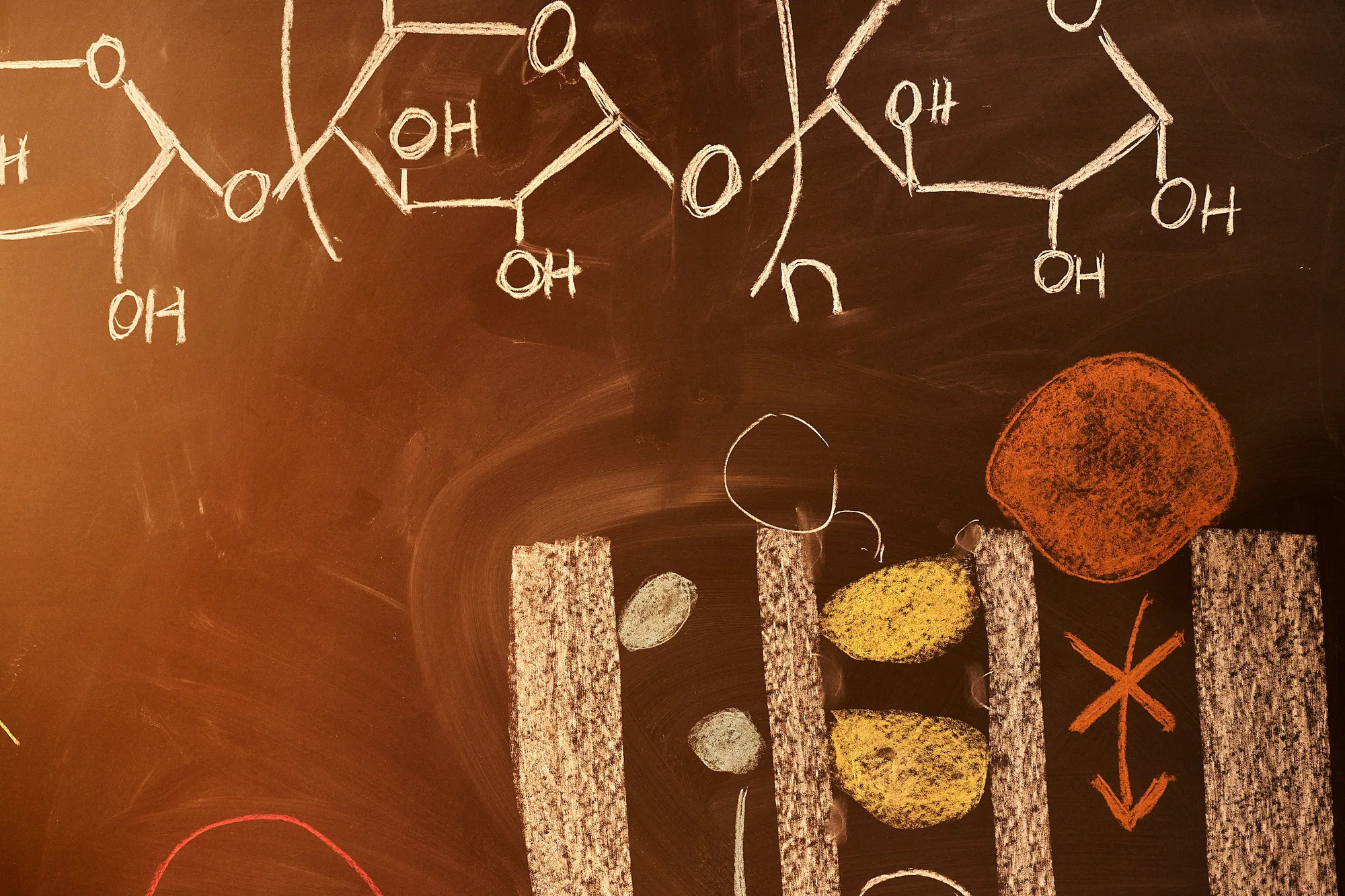
Its porous silica particles have a precisely engineered internal pore structure designed to entrap a portion of digestive enzymes involved in carbohydrate and fat digestion.
- Eat. Carbohydrates, fats and proteins enter the digestive system and digestive enzymes begin breaking the meal down.
- Selective enzyme entrapment. SiPore®’s engineered pores interact with digestive enzymes according to size. Amylase, involved in carbohydrate digestion, and lipase, involved in fat digestion, can enter the pore structure and a portion becomes entrapped. Preclinical testing reported that smaller proteases involved in protein digestion are not entrapped.
- Slower breakdown. With a portion of amylase and lipase temporarily separated from the food, carbohydrates and fats are broken down more gradually.
- More gradual energy delivery. Because the meal is broken down more gradually, energy from the meal becomes available more gradually.
The mechanism is physical and local. SiPore® does not need to enter the bloodstream to work.
 Watch the filmHow SiPore® works
What is the size-exclusion principle?
SiPore®’s selectivity is physical. Molecules have to be the right size to interact effectively with the engineered pore structure.
- Too large: they cannot enter the pores.
- The right size: enzymes such as amylase and lipase can enter and become entrapped within the pore structure.
- Too small: they are not effectively retained.
This creates a simple scientific principle: the pore has to fit the enzyme.
Why are the pores important?
The pores are the functional core of SiPore®.
Their dimensions are precisely controlled so the particle can selectively interact with digestive enzymes such as amylase and lipase during digestion. This reduces the amount of those enzymes freely available to interact with food during part of the digestive process.
Which digestive enzymes does SiPore® interact with?
Amylase helps break down carbohydrates.
Lipase helps break down fats.
Evidence from preclinical research supports that SiPore®’s engineered pores can physically entrap a portion of these enzymes during digestion, reducing their availability to interact with the meal and slowing carbohydrate and fat breakdown.
Does SiPore® affect the enzymes that digest protein?
The SiPore® pore structure is designed around size selectivity.
Preclinical testing reported that proteases — digestive enzymes involved in breaking down protein — are not entrapped by the SiPore® pore structure because they are smaller than the enzymes targeted by the mechanism.
Protein-digesting proteases are therefore not the intended target of SiPore®’s mechanism.
Why doesn’t SiPore® entrap every digestive enzyme?
Because the interaction is determined by the engineered pore structure and molecular size.
SiPore® is not a non-selective sponge. Its pores have controlled dimensions, creating a physical size filter.
Enzymes with different dimensions behave differently: preclinical testing showed that amylase and lipase can be entrapped while smaller proteases are not.
Does SiPore® block carbohydrates?
No. SiPore® should not be described as a carb blocker.
It slows the breakdown of carbohydrates during digestion by entrapping a portion of digestive enzymes involved in carbohydrate digestion.
Does SiPore® block fat?
No. SiPore® is not a fat blocker.
Its mechanism slows the breakdown of fats during digestion by entrapping a portion of digestive enzymes such as lipase.
Does SiPore® stop digestion or absorption?
No. SiPore® does not stop digestion, eliminate digestive enzymes or stop absorption.
It entraps a portion of digestive enzymes and makes the breakdown of carbohydrates and fats more gradual. SiPore® slows the breakdown of carbohydrates and fats, supporting more gradual energy delivery.
Where & When It Works
Where does SiPore® work?
SiPore® works locally in the gastrointestinal tract, where digestion takes place.
Does SiPore® enter the bloodstream?
No. SiPore® performs its function within the gastrointestinal tract and does not enter the bloodstream.
Why does a gut-local mechanism matter?
It means SiPore® performs its intended function directly where the meal is being processed.
The technology does not need to circulate through the bloodstream in order to act on digestion.
Why does digestion speed matter?
A meal’s metabolic impact depends not only on what it contains, but also on how quickly carbohydrates and fats are broken down and their energy becomes available to the body.
Many modern meals contain carbohydrates and fats in forms that can be digested quickly. SiPore® is built around the idea that digestion speed is therefore an important intervention point.
How quickly does SiPore® start working?
SiPore®’s local mechanical mode of action begins during digestion of the first meal with which it is used.
No loading period is required for the mechanism to begin.
What does “works from the first meal” mean?
It means the mechanism itself begins with the first meal.
It does not mean that longer-term outcomes such as changes in body weight, body composition, A1C or cholesterol occur after one meal. Those outcomes need to be understood according to the relevant study and timeframe.
Does SiPore® need to build up in the body?
No loading period is required for the local digestive mechanism.
SiPore® works with the meal during digestion rather than relying on accumulation in the bloodstream or body.
Is SiPore® intended to be used with meals?
Yes. SiPore® is designed around the meal because that is when digestion takes place and when its local mechanism is relevant.
The behavioral idea is simple: the meal arrives. Reach for SiPore®. Have your meal.
Specific dosing and directions depend on the finished product and should be taken from that product’s instructions.
Evidence
Has SiPore® been studied in humans?
Yes. The SiPore® research program includes human clinical studies, including randomized and placebo-controlled research, alongside real-world evidence, consumer studies and preclinical mechanism research.
The current research program includes 6 clinical trials and 9 peer-reviewed publications.
What types of evidence support SiPore®?
- Clinical studies. Controlled human research conducted under defined study protocols.
- Real-world evidence. Evidence generated through use outside a traditional randomized controlled trial.
- Consumer studies. Structured research into experiences reported by users.
- Preclinical research. Laboratory and animal research used to understand mechanism and biological effects.
These evidence types are deliberately kept separate because they support different kinds of conclusions.
What is the SHINE trial?
SHINE is the largest SiPore® clinical trial completed to date.
It was a randomized, double-blind, placebo-controlled study involving 318 individuals with prediabetes or type 2 diabetes, published in eClinicalMedicine in 2026.
The study evaluated glycemic control and a broader set of metabolic outcomes.
Are all SiPore® studies published in peer-reviewed journals?
No. The research program includes both peer-reviewed publications and additional controlled studies documented in internal study reports.
The Publications page contains peer-reviewed research only. Other completed studies, including postprandial and CGM studies, are presented under Research & Evidence.
How many peer-reviewed publications are there?
The current SiPore® research portfolio includes 9 peer-reviewed publications spanning human clinical research, safety, mechanism studies and preclinical investigation.
Why are consumer surveys not presented as clinical studies?
Because they answer different questions.
Consumer surveys tell us what people report experiencing. Clinical studies investigate defined outcomes under controlled research conditions.
SiPore.com identifies these evidence types clearly rather than treating them as interchangeable.
What does “preclinical research” mean?
Preclinical research includes laboratory and animal research conducted before or alongside human clinical evaluation.
For SiPore®, preclinical work has been important for understanding areas such as engineered pore structure, digestive-enzyme entrapment and carbohydrate and fat digestion.
Preclinical findings should not be presented as demonstrated human outcomes.
Safety & Tolerability
Has SiPore® been studied for safety?
Yes. Safety and tolerability have been evaluated in human research, including a dedicated First-in-Man safety study and larger clinical trials.
Across the human evidence base, SiPore® has been generally well tolerated.
Is SiPore® safe for everyone?
The evidence supports describing SiPore® as generally well tolerated, not as “safe for everyone.”
Suitability, directions, medication timing and contraindications depend on the specific finished product and the individual using it. Users should follow the instructions for the specific SiPore®-powered product.
What adverse events have been reported?
Across the human research program, reported adverse events have primarily involved mild and transient gastrointestinal symptoms.
For detailed study-specific safety information, see the Safety & Tolerability page.
Does SiPore® affect vitamins and minerals?
Clinical research has included monitoring of relevant vitamin and mineral measures.
The current internal evidence indicates no concerning changes in measured micronutrient status in the evaluated studies. Because the exact measurements vary by study, this should not be broadened into a universal statement that SiPore® has no effect on nutrient absorption.
Is silica already present in the food environment?
Silica has a long history of dietary exposure and occurs naturally in the environment and human diet.
SiPore® uses synthetic amorphous silica manufactured with a precisely controlled physical structure. The fact that silica is familiar in the diet should not be used to imply that naturally occurring dietary silica and the engineered SiPore® particle are physically identical.
What is the GRAS status of SiPore® silica?
For the specific SiPore® ingredient used in Glucose Stabilizer (MSP15), the company has documented a self-affirmed Generally Recognized As Safe (GRAS) determination for its intended uses.
Products & Applications
What is the difference between SiPore® and SiPore Technologies?
SiPore Technologies is the company that develops the technology.
SiPore® is the patented technology and meal-companion category used in products and partner applications.
What are SIGRID and SiPore® Pro?
SIGRID is the owned consumer brand that brings SiPore®-powered products to consumers through SigridLife.com.
SiPore® Pro is the practitioner-facing brand and professional product platform for healthcare practitioners.
What does “Powered by SiPore®” mean?
Powered by SiPore® is the technology endorsement used for SIGRID and external partner products containing SiPore®.
It identifies the underlying technology without replacing the product’s own brand or regulatory classification.
Are all SiPore®-powered products the same?
No. Different products can use SiPore® in different formats, doses and regulatory categories.
The technology-level mechanism remains SiPore®’s, but product-specific claims, instructions and classifications belong to the individual finished product.
Is Carb Fence the same as Glucose Stabilizer?
No. Both are SIGRID products powered by SiPore®, but they have different regulatory classifications.
Carb Fence is a medical food intended for the dietary management of impaired carbohydrate metabolism under healthcare-professional supervision.
Glucose Stabilizer is a dietary supplement for everyday metabolic support.
Their product claims, directions and evidence permissions are therefore not interchangeable.
Where can I find products powered by SiPore®?
For consumer products: visit SigridLife.com.
For healthcare-professional products and resources: visit SiPorePro.com.
For partnership and other applications: explore Applications on SiPore.com.
Looking for product-use information?
Exact dose, medication timing, pregnancy guidance, contraindications, alcohol, pricing, subscriptions and other operational questions belong to the specific finished product.