
Mesoporous Silica Particles Retain Their Structure and Function while Passing through the Gastrointestinal Tracts of Mice and Humans
Iqbal et al., 2023 · ACS Applied Materials & Interfaces
View publicationSiPore® is designed to perform its function locally in the gastrointestinal tract, where digestion happens. It does not enter the bloodstream. Safety and tolerability have been evaluated across the human SiPore® research program, including dedicated safety research and a large randomized, placebo-controlled clinical trial. Across the evidence base, SiPore® has been generally well tolerated.
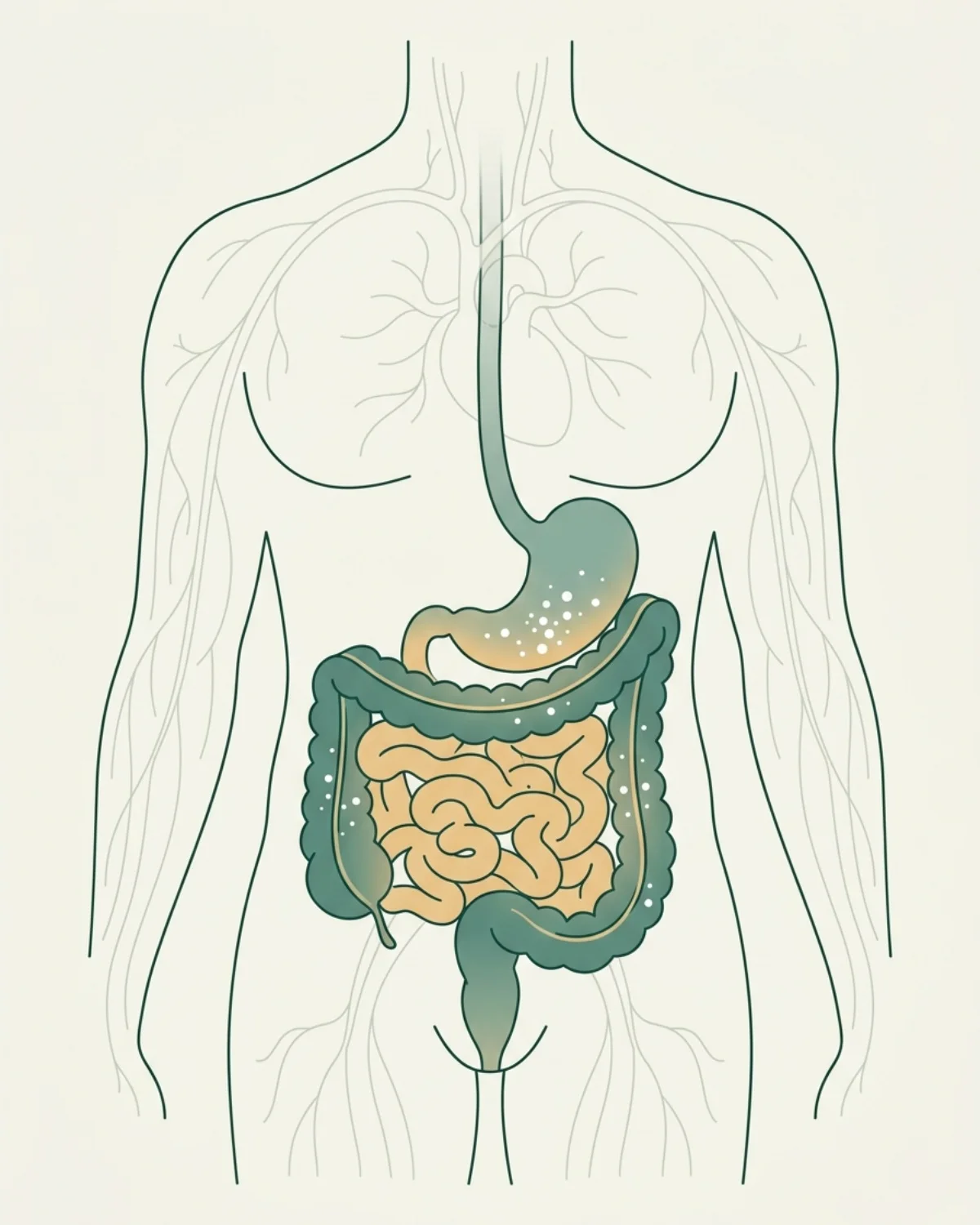
SiPore® is based on precisely engineered porous silica particles. During digestion, the particles remain within the gastrointestinal tract, where their pores interact with digestive enzymes involved in breaking down carbohydrates and fats. SiPore® does not need to enter the bloodstream to perform its function. Its action is physical and local rather than systemic.
GI tract — SiPore® acts here Bloodstream — SiPore® does not enter
Micron-sized particles support a gut-local mode of action. SiPore® particles are micron-sized. Research examining mesoporous silica particles as they passed through the gastrointestinal tract found that the particles retained their structure and supported the conclusion that their lack of systemic absorption is related to their micron-scale size.
The study examined particle structure and behavior during passage through the gastrointestinal tract and reported that the particles were not degraded during transit.
Iqbal et al., 2023 · ACS Applied Materials & Interfaces
View publicationGut-local action is a property of the technology. Safety is evaluated through evidence.
The fact that SiPore® works locally does not, by itself, establish safety. That is why safety and tolerability have also been evaluated directly in human clinical studies.
Where SiPore® works and how SiPore® has been tolerated are two related but distinct parts of the scientific story.
Across the current human evidence base, reported adverse events have primarily been mild and transient gastrointestinal symptoms.
SHINE is the largest SiPore® clinical trial conducted to date. Safety and tolerability were assessed throughout the study, and SiPore® was generally well tolerated in the studied population.
Baek J, et al. 2026. eClinicalMedicine 97:104042.
Read the paperWhat was reported? “Generally well tolerated” does not mean that no adverse events can occur. Across the human research program, reported tolerability findings have primarily involved gastrointestinal symptoms that were mild and transient.
Clinical safety evaluation considers more than whether participants report symptoms. Across the SiPore® clinical program, safety assessments have included clinical observations and laboratory measures designed to identify potential systemic effects.
Taking a SiPore®-powered product? Directions, medication timing, contraindications and suitability can differ by finished product and regulatory classification. Always follow the instructions provided with the specific product.
The U.S. real-world evidence study also reported good tolerability and high adherence in everyday use.
SiPore.com does not use absolute safety language.
Instead, we present: where SiPore® works, how it has been studied, what was observed, and the limits of the available evidence. That means using “generally well tolerated” when describing the overall evidence base and providing study-specific detail where appropriate.
SiPore® works locally in the gastrointestinal tract and does not enter the bloodstream. Across human clinical research, it has been generally well tolerated.